By Susan Ferrechio and Mary McCue Bell (The Washington Times)
President Trump weighed in Sunday on the collapse of U.S.-Canada trade talks, signaling in a 1 a.m. social media post that he was not backing down from the terms Canada had rejected.
“Canada wants the benefits of being a State, without being one!!! They have also charged our great farmers, for many years, massive amounts of Tariffs. No more!!!” Mr. Trump posted.
The United States imposed 50% tariffs on $20 billion in Canadian imports — a total Canadian officials value at closer to $28 billion — after trade negotiations collapsed late Friday.
U.S. Trade Representative Jamieson Greer told “Fox & Friends Weekend” that no new trade talks were scheduled.
“We’ve said enough, and so we’ve taken countermeasures. Our interest is in protecting American workers and protecting American supply chains,” Mr. Greer said.
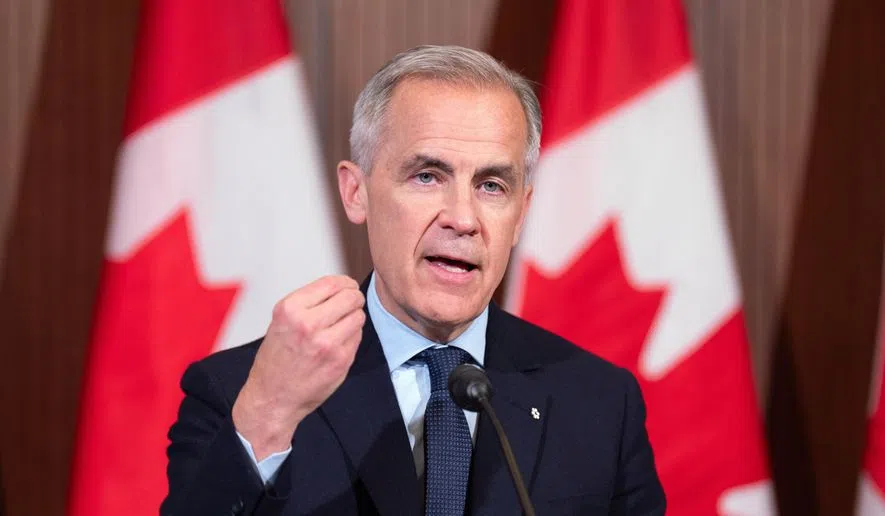
Prime Minister Mark Carney said Canada will impose dollar-for-dollar retaliatory tariffs on U.S. goods beginning Sept. 8. The tariffs will target steel, dairy, appliances, agricultural equipment, pulp and paper, and electronics.
Mr. Carney said during a Saturday press conference that the negotiations unraveled because U.S. negotiators introduced last-minute changes, among them limitations on Canada’s ability to secure trade deals with other countries.
“We’re the partner of choice in many respects for countries around the world, and the Americans wanted to restrict that. Unacceptable,” Mr. Carney said.
Mr. Carney said U.S. negotiators blindsided the Canadians by changing the proposed auto tariff reductions. U.S. negotiators also sought to limit protections for Canada’s French-language content on streaming services and requirements for bilingual labeling on appliances, electronics and instruction manuals the U.S. exports to Canada, Mr. Carney said.
The impasse deepens a trade war that began early in Mr. Trump’s second term.
The two nations had already imposed 25% tariffs on steel and aluminum under Section 232, as well as 25% tariffs on automobiles and long-standing duties on Canadian softwood lumber.
The 50% tariffs levied on Canada on Saturday will be imposed on products including hockey sticks, wine, cement, honey, cut flowers, vinyl floors, tableware, school supplies, plywood, furniture parts, musical instrument cases and hundreds of other products.
The heightened trade fight is likely to deepen the acrimonious relationship between the Trump administration and the Canadian government.
Mr. Trump initially imposed tariffs on Canadian goods effective March 4, 2025, citing the trade deficit, border security concerns, and the flow of fentanyl into the United States. Mr. Trump has long accused Canadians of unfair trade practices that hurt America’s lumber industry and farmers.
Mr. Trump has repeatedly called on Canada to become America’s 51st state and said Canada would fail to survive without the United States subsidizing it through trade.
The two countries exchanged roughly $880 billion in goods and services last year. Canada is America’s second-largest trading partner after Mexico, but it is far more reliant on the United States for trade.
More than 70% of Canada’s exports are purchased by the United States. About 15% of U.S. exports go to Canada.
The 50% tariffs were originally set to take effect earlier in the week, but Mr. Trump extended the deadline to let talks continue.
Mr. Greer said in a statement that Canada “declined to finalize the trade deal under the terms agreed earlier this week,” which he described as “the best treatment of any major exporter to our market.”
The worsening trade war with Canada follows Mr. Trump’s announcement that he would waive higher tariffs on ground beef imports, a move aimed at lowering prices for American households struggling with soaring meat costs.
Under the announced directive, which White House officials say will be formally signed in an executive order within two weeks, the U.S. will allow up to 300,000 metric tons of ground beef into the country for the next 90 days with no out-of-quota tariff, Mr. Trump said Friday on social media.
That would temporarily suspend the higher tariffs triggered when trade volume exceeds a certain threshold, the structure commonly known as a tariff-rate quota.
Mr. Trump added that foreign beef exporters have committed to selling beef at 25% below current market prices. Ground beef is selling at an average of $6.89 per pound.
This article was made available to WMAL via The Washington Times.